Introduction
A small education nonprofit lands its first seven-figure grant. Suddenly, the part-time bookkeeper who used to handle payroll and reconcile the checking account is drowning in restricted fund tracking, reimbursement deadlines, and a board asking pointed questions about cash reserves.
This scenario plays out constantly across the sector. 36% of nonprofits ended 2024 with an operating deficit, the highest rate in a decade of tracking.
52% had three months or less of cash on hand, according to Nonprofit Finance Fund's 2025 State of the Nonprofit Sector Survey.
Limited budgets. Complex restricted funds. Board members demanding transparency. And no realistic way to afford a full-time CFO salary. This guide covers what a fractional CFO actually does, when to bring one on, what it costs, and how to find the right partner for a mission-driven organization.
Key Takeaways
- Fractional CFOs deliver senior-level strategy part-time, without full-time salary and benefits costs
- Common triggers include grant growth, leadership transitions, and pressure for board-ready reporting
- Services span budgeting, cash flow forecasting, grant compliance, and board communication
- Pricing runs hourly, project-based, or retainer, depending on scope and complexity
- Nonprofit-specific fund accounting knowledge separates specialized CFOs from generalists
What Is a Fractional CFO for Nonprofits?
A fractional CFO is a senior finance professional who provides strategic financial leadership on a part-time, project, or retainer basis rather than as a full-time employee. Think of it as buying exactly the expertise you need, in the quantity you need it.
This role goes well beyond bookkeeping or even controller-level work. A fractional CFO focuses on:
- Long-range forecasting and scenario planning
- Board and funder reporting
- Risk oversight and financial strategy
- Guiding leadership through growth or transition
Nonprofit-focused fractional CFOs bring something a generalist finance hire often lacks: fluency in restricted versus unrestricted fund accounting, grant compliance requirements, and donor reporting expectations. That distinction matters.
A CFO who's only worked in for-profit environments may not understand why a grant with time restrictions changes how revenue gets recognized, or why a single misallocated expense can jeopardize a funder relationship.
Fractional CFO vs. Full-Time CFO vs. Bookkeeper/Controller
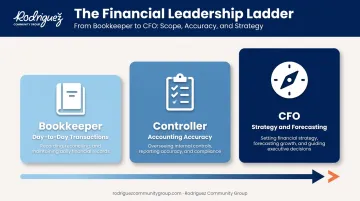
These three roles sit at different altitudes within an organization's finance function.
| Role | Primary Focus | Typical Scope |
|---|---|---|
| Bookkeeper | Day-to-day transactions | Accounts payable, payroll entries, data entry |
| Controller | Accounting accuracy | Month-end close, audit prep, GAAP compliance |
| CFO (fractional or full-time) | Strategy and forecasting | Budgeting, cash flow, board reporting, risk management |
A bookkeeper keeps the books current. A controller makes sure those books are accurate and audit-ready. A CFO looks forward, translating financial data into decisions about program funding, reserves, and growth.
Most nonprofits don't need a full-time CFO until they're operating at significant scale and complexity, typically well into eight-figure revenue territory with daily transaction volume that demands constant oversight.
Below that point, fractional support delivers the same strategic thinking without the six-figure salary commitment. The right model ultimately depends on how complex your daily financial operations are, not just your budget size.
Signs Your Nonprofit Needs a Fractional CFO
Certain moments tend to expose the gap between what your current finance setup can handle and what your organization actually needs. Watch for these triggers:
- A sudden jump in grant funding that introduces new restricted fund tracking and reporting obligations
- Rapid program or staff growth that outpaces your existing financial infrastructure
- Leadership transitions, especially the departure of an Executive Director or finance lead
- Board demands for sharper financial reporting that your current team can't produce
That last point deserves attention. Board financial oversight isn't always as strong as it should be.
In BoardSource's Leading with Intent study of 820 nonprofit leaders, both CEOs and board chairs graded their own board's financial oversight a B-. In fact, 24% of CEOs said their board spent too little time on it.
Here's another red flag: if your Executive Director spends hours each week buried in spreadsheets instead of leading programs and partnerships, that's a sign the financial function has outgrown its current owner.
The same goes for organizations relying on a single overworked bookkeeper or a volunteer treasurer to make strategic financial calls they were never trained to handle.
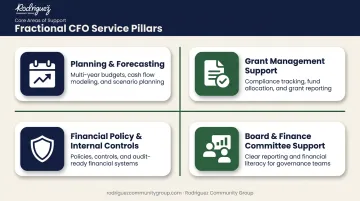
Key Services a Fractional CFO Provides
A good fractional CFO doesn't just report numbers. They shape how your organization uses money to advance its mission.
Planning and forecasting. This covers budgeting, variance analysis, and cash flow forecasting, work that keeps spending aligned with both mission priorities and funder expectations. Scenario planning matters especially for nonprofits, since grant disbursement timing rarely matches when bills actually come due.
Grant management support. Fractional CFOs help with:
- Proper recording of restricted and unrestricted funds
- Allocation methodologies across programs and grants
- Reimbursement request preparation
- Compliance documentation for funders
Financial policy and internal controls. Strengthening accountability structures, such as clear approval workflows and segregation of duties, reduces the risk of mismanagement, something boards and auditors both care about deeply.
Board and finance committee support. This includes building dashboards non-finance board members can actually understand, attending finance committee meetings, and translating dense financial statements into plain language.
RZCG has delivered exactly this kind of support through its Strategic Finance Assessment and CFO services. The team has worked alongside organizations like English Learners Success Forum and The Oakland REACH on financial assessments, forecasting tools, and decision-making frameworks tailored to each group's stage of growth.
Benefits of Hiring a Fractional CFO for Nonprofits
The appeal isn't just cost, though cost matters a lot. Fractional CFOs offer several distinct advantages:
- Cost-effectiveness. Access senior-level expertise without a full-time salary, benefits package, or payroll tax burden, freeing dollars for programs instead of overhead.
- Strategic guidance during transitions. Gain a thought partner for the Executive Director and board, particularly valuable during growth spurts or leadership changes.
- Flexibility and scalability. Scale support up or down as needs shift, from five hours a week for dashboard maintenance to twenty hours during a major grant application.
- Cross-organizational pattern recognition. Draw on a CFO who has seen more grant structures, audit findings, and board dynamics than someone embedded in just one organization.
- Stronger risk management. Reduce the likelihood of costly compliance issues through better internal controls and audit readiness.
One caveat matters: fractional CFO support isn't free, and for very small nonprofits it can still represent a meaningful budget line. The value calculation depends on comparing it honestly against what you'd spend, and what you'd risk, without that expertise in place.
Cost of a Fractional CFO for Nonprofits
Pricing for fractional CFO services falls into three structures.
| Pricing Model | Best For | How It Works |
|---|---|---|
| Hourly billing | Limited, ongoing monthly needs | Pay only for hours used |
| Flat project fee | One-time initiatives (audit prep, system setup) | Fixed cost for defined scope |
| Monthly retainer | Predictable, recurring support | Set fee for agreed hours/deliverables |
Rates vary based on:
- The CFO's experience level and area of specialization
- Your organization's geographic location
- Complexity of the work required
A nonprofit needing basic dashboard maintenance will pay less than one navigating multi-state grant compliance across a dozen funders.
Before deciding, compare the fractional cost against the fully-loaded cost of a full-time hire, meaning salary plus benefits plus payroll taxes plus recruitment costs. That comparison almost always favors fractional support for smaller organizations, since you're not paying for capacity you don't need every week.
Firms like RZCG typically structure these engagements as monthly retainers scoped to an organization's size and goals, so nonprofits pay for defined deliverables rather than a full-time seat.
How to Choose the Right Fractional CFO Partner
Not every fractional CFO understands nonprofit finance. Some come from purely corporate backgrounds and will need to learn restricted fund accounting on your dime.
Prioritize these qualities when evaluating candidates:
- Nonprofit-specific expertise, particularly around restricted funding, grant compliance, and translating financials for non-finance board members
- Mission alignment and cultural fit, since this person becomes part of your leadership conversations
- A collaborative working style, not a distant consultant who parachutes in monthly and disappears
That last point deserves emphasis. There's a real difference between hiring an outside consultant who delivers a report and moves on, versus bringing in someone who functions as an embedded extension of your team. That person builds institutional knowledge over time.
Rodriguez Community Group (RZCG) operates on that embedded-partner model. Rather than positioning itself as an outside firm looking in, RZCG's team, including financial management specialists like Rachel Deaner, works directly alongside nonprofit leadership at organizations with up to 50 staff and $25 million in revenue.
The engagement with English Learners Success Forum illustrates this well. What began as fiscal sponsor spin-off support evolved into ongoing incremental CFO services, built on trust and institutional knowledge accumulated over time. That's the kind of relationship worth looking for, wherever you land.

Frequently Asked Questions
What is the difference between a CFO and a fractional CFO?
A traditional CFO is a full-time, in-house executive dedicated exclusively to one organization. A fractional CFO delivers the same strategic expertise on a part-time, project, or retainer basis, typically at a fraction of the cost.
How much does a fractional CFO cost for a nonprofit?
Costs vary by hourly rate, project fee, or monthly retainer, depending largely on the CFO's experience and the scope of work involved. Even at the higher end, this generally costs far less than a full-time hire's total compensation package.
How many hours does a fractional CFO typically work for a nonprofit?
Hours are customized to your needs. A maintenance-level engagement might run just five hours weekly for dashboard upkeep, while a growth-stage organization may need 20 hours weekly for scenario planning and board training.
Is hiring a fractional CFO worth it for a small nonprofit?
For most small-to-mid nonprofits not yet ready for a full-time CFO, yes. It's a cost-effective way to access senior financial expertise and strategic guidance without the overhead of a full executive salary.
What should a nonprofit look for when hiring a fractional CFO?
Look for nonprofit accounting experience, strong communication skills with non-finance audiences, genuine mission alignment, and a collaborative, team-embedded working style rather than a transactional consulting relationship.
When should a nonprofit consider a full-time CFO instead of fractional support?
Organizations with daily financial oversight needs, complex multi-revenue streams requiring constant attention, or an internal controller ready to step into a strategic role are often better served by bringing that leadership in-house.